
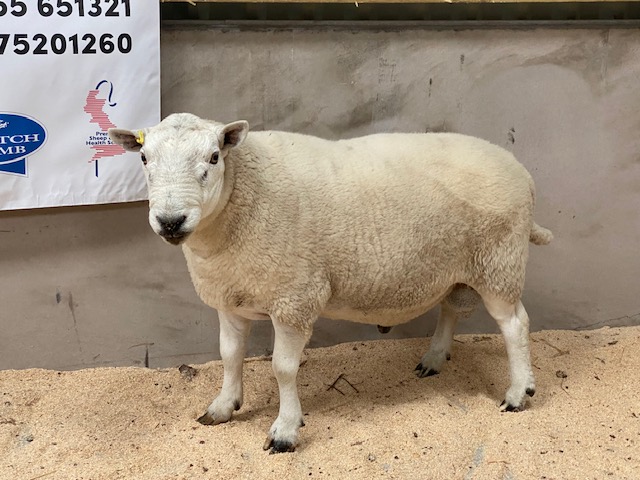
How working with the land – not against it – supports naturally resilient North Country Cheviots.
The North Country Cheviot is a breed shaped by environment rather than intervention. Developed on exposed ground in the north of Scotland, it has long been valued for hardiness, maternal strength and the ability to thrive where other breeds struggle.
The North Country Cheviot is a breed shaped by environment rather than intervention. Developed on exposed ground in the north of Scotland, it has long been valued for hardiness, maternal strength and the ability to thrive where other breeds struggle.
For many producers, adopting organic or low-input management principles complements these natural traits. By working with the sheep’s inherent resilience rather than against it, flocks can remain productive while reducing reliance on intensive inputs.
⸻
Breeding for Natural Resilience
Organic systems place strong emphasis on breeding animals suited to their environment.
In North Country Cheviots, this means selecting for:
• Strong feet and legs
• Sound teeth and longevity
• Good mothering ability
• Vigorous lambs at birth
• Ability to maintain condition on forage
Rather than compensating for weakness through concentrate feeding or heavy intervention, organic-style management encourages the selection of sheep that naturally perform under local conditions.
Over time, this strengthens flock resilience.
⸻
Forage-Based Nutrition
At the heart of organic practice is reliance on pasture.
North Country Cheviots are particularly well suited to forage-based systems. Their ability to utilise rough grazing efficiently makes them ideal for rotational grazing, mixed swards and species-rich pasture.
Key principles include:
• Maintaining soil health through careful grazing management
• Avoiding overstocking
• Supporting biodiversity in pasture
• Reducing reliance on high levels of concentrate feed
Healthy soils produce diverse, nutrient-rich forage — which in turn supports strong immune systems and steady growth.
⸻
Preventative Health Management
Organic livestock systems prioritise prevention over routine medication.
This does not mean avoiding treatment when necessary. Rather, it means:
• Selecting sheep with natural parasite tolerance
• Rotational grazing to reduce worm burden
• Monitoring condition and health closely
• Using targeted treatments instead of blanket dosing
North Country Cheviots, known for vigour and durability, are well suited to this approach when managed correctly.
⸻
Outdoor Lambing and Low-Intervention Systems
Cheviots have a long tradition of outdoor lambing.
Hill and Park type ewes are both recognised for:
• Lambing with minimal assistance
• Strong bonding with lambs
• Producing lambs with good early vigour
In well-managed systems, outdoor lambing can reduce stress, lower disease pressure associated with housing, and allow natural maternal behaviour to flourish.
⸻
Soil, Environment and Sustainability
Organic principles extend beyond the sheep themselves.
Responsible grazing management:
• Supports soil structure
• Encourages diverse plant species
• Enhances wildlife habitat
• Improves long-term land productivity
Cheviots’ grazing behaviour and mobility make them effective managers of upland and marginal ground, contributing to sustainable land stewardship.
⸻
Longevity and Reduced Replacement Rate
Durable sheep are central to lower-input systems.
North Country Cheviot ewes are widely valued for longevity. Draft ewes often continue productive lives for several additional seasons on lower ground. A ewe that remains sound and fertile over many years reduces replacement pressure and improves overall flock efficiency.
Longevity is not only economically beneficial – it is also aligned with sustainable livestock management.
⸻
Working With the Breed, Not Against It
Organic and low-input practices align naturally with the fundamental characteristics of the North Country Cheviot.
This is a breed built for:
• Hardiness
• Maternal strength
• Efficient forage use
• Long working life
By selecting wisely and managing thoughtfully, producers can maintain healthy, naturally resilient flocks while supporting environmental responsibility.
In many respects, the North Country Cheviot was bred for exactly this kind of system.

